2018年4月9日 星期一

Python - pandasql - 如何在Python中使用sql語法操作dataframe -Querying a dataframe with SQL

Information:

System version : Windows 10 64-bit
Python version : Python 3.6.0 :: Anaconda 4.3.1 (64-bit)

先建立資料

Code:

number = [1,2,3,4,5]
sex = ['male','female','female','female','male']
df_new = pd.DataFrame()
df_new['number'] = number
df_new['sex'] = sex
print(df_new)

Result:

   number     sex
0       1    male
1       2  female
2       3  female
3       4  female
4       5    male

使用sql語法來操作dataframe

Code:

from pandasql import sqldf
q = 'SELECT * FROM df_new  where sex = "male";'
df_one= sqldf(q)
print(df_one)

Result:

   number   sex
0       1  male
1       5  male
​

2018年4月3日 星期二

Python - 在Pandas DataFrame中缺失資料的處理-以上一個row的值來填補 - How to replace NaN(None,Null) by preceding values in pandas DataFrame?

Information:

System version : Windows 10 64-bit
Python version : Python 3.6.0 :: Anaconda 4.3.1 (64-bit)

Code:

df1 = pd.DataFrame([[3, 1, 8], [None, 5, None], [None, None, 9]])
df1_fillna = df1.fillna(method='ffill')
print('df1')
print(df1)
print('='*20)
print('df1_fillna')
print(df1_fillna)

Result:

df1
     0    1    2
0  3.0  1.0  8.0
1  NaN  5.0  NaN
2  NaN  NaN  9.0
====================
df1_fillna
     0    1    2
0  3.0  1.0  8.0
1  3.0  5.0  8.0
2  3.0  5.0  9.0
​

2018年3月23日 星期五

Python Pandas Dataframe - 如何將多行row依指定欄位轉換為1行row - How to combine multiple rows to one row -

版本相關資訊:
System version : Windows 10 64-bit
Python version : Python 3.6.0 :: Anaconda 4.3.1 (64-bit)
Pandas version : 0.21.1
How do I get from

  device_id  temp_a  temp_b  temp_c
0         0     0.2     0.8     0.6
1         0     0.1     0.9     0.4
2         1     0.3     0.7     0.2
3         2     0.5     0.5     0.1
4         2     0.1     0.9     0.4
5         2     0.7     0.3     0.9
to

  device_id  temp_a  temp_b  temp_c  temp_a_1  temp_b_1  temp_c_1  temp_a_2  \
0         0     0.2     0.8     0.6       0.1       0.9       0.4       NaN   
1         1     0.3     0.7     0.2       NaN       NaN       NaN       NaN   
2         2     0.5     0.5     0.1       0.1       0.9       0.4       0.7   

   temp_b_2  temp_c_2  
0       NaN       NaN  
1       NaN       NaN  
2       0.3       0.9
Code:
df_raw = pd.DataFrame({'device_id' : ['0','0','1','2','2','2'],
                   'temp_a'    : [0.2,0.1,0.3,0.5,0.1,0.7],
                   'temp_b'    : [0.8,0.9,0.7,0.5,0.9,0.3],
                   'temp_c'    : [0.6,0.4,0.2,0.1,0.4,0.9],
              })

print(df_raw)

df_except = pd.DataFrame({'device_id' : ['0','1','2'],
                          'temp_a':[0.2,0.3,0.5],
                          'temp_b':[0.8,0.7,0.5],
                          'temp_c':[0.6,0.2,0.1],
                          'temp_a_1':[0.1,None,0.1],
                          'temp_b_1':[0.9,None,0.9],
                          'temp_c_1':[0.4,None,0.4],
                          'temp_a_2':[None,None,0.7],
                          'temp_b_2':[None,None,0.3],
                          'temp_c_2':[None,None,0.9],

              })
df_except2 = df_except[['device_id','temp_a','temp_b','temp_c','temp_a_1','temp_b_1','temp_c_1','temp_a_2','temp_b_2','temp_c_2']]
print(df_except2)

# Method1
g = df_raw.groupby('device_id').cumcount()
df = df_raw.set_index(['device_id', g]).unstack().sort_index(axis=1, level=1)
df.columns = ['{}_{}'.format(i,j) if j != 0 else '{}'.format(i) for i, j in df.columns]
df = df.reset_index()
print (df)

# Method2
import numpy as np
device_id_list = df_raw['device_id'].tolist()
device_id_list = list(np.unique(device_id_list))

append_df = pd.DataFrame()
for device_id in device_id_list:
    tmp_df = df_raw.query('device_id=="%s"'%(device_id))

    if len(tmp_df)>1:
        # 拆成單筆row存到list
        one_raw_list=[]
        for i in range(0,len(tmp_df)):
            one_raw_df = tmp_df.iloc[i:i+1]
            one_raw_list.append(one_raw_df)

        # 用來暫存做concat後的資料
        tmp_combine_df = pd.DataFrame()
        for i in range(0,len(one_raw_list)-1):
            # 取得與整理下個row
            next_raw = one_raw_list[i+1].drop(columns=['device_id']).reset_index(drop=True)
            new_name_list=[]
            for old_name in list(next_raw.columns):
                new_name_list.append(old_name+'_'+str(i+1))
            next_raw.columns = new_name_list

            if i==0:
                # 整理第1筆raw
                current_raw = one_raw_list[i].reset_index(drop=True)
                tmp_combine_df = pd.concat([current_raw, next_raw], axis=1)
            else:
                # 與先前整理好的raw做concat
                tmp_combine_df = pd.concat([tmp_combine_df, next_raw], axis=1)
        tmp_df = tmp_combine_df
    tmp_df_columns = tmp_df.columns
    append_df_columns = append_df.columns
    append_df = pd.concat([append_df,tmp_df],ignore_index =True)
    if  len(tmp_df_columns) > len(append_df_columns):
        append_df = append_df[tmp_df_columns]
    else:
        append_df = append_df[append_df_columns]
print(append_df)
​

2018年3月14日 星期三

Python - list的元素的刪除,以另一個list來指定要刪除的元素

版本相關資訊:

System version : Windows 10 64-bit
Python version : Python 3.6.0 :: Anaconda 4.3.1 (64-bit)

Codes:

list1=[1,2,3,3,2]
list2=[2,3]

list3 = [x for x in list1 if x not in list2]
print(list3)

結果:


[1]
​

2018年2月12日 星期一

Python- 去除list中半形與全形標點符號 -Removing Punctuation From Python List Items

版本相關資訊:

System version : Windows 10 64-bit
Python version : Python 3.6.0 :: Anaconda 4.3.1 (64-bit)

Codes:

tokens = ['abc',',.aaa','=','』','abc']
full_punctuation = '!"#$%&\'()*+,-./:;<=>?@[\\]^_`{|}~' + '→↓△▿⋄•!??〞#$%&』()*+,-╱︰;<=>@〔╲〕 _ˋ{∣}∼、〃》「」『』【】﹝﹞【】〝〞–—『』「」…﹏'

punctuation_tokens_1 = [ele for ele in tokens if not ele in full_punctuation] 
print('punctuation_tokens_1 :',punctuation_tokens_1)

translator = str.maketrans('', '', full_punctuation)
punctuation_tokens_2 = [s.translate(translator) for s in tokens]
print('punctuation_tokens_2 :',punctuation_tokens_2)

punctuation_tokens_3 = [ele for ele in punctuation_tokens_2 if not ele=='']
print('punctuation_tokens_3 :',punctuation_tokens_3)

結果:

punctuation_tokens_1 : ['abc', ',.aaa', 'abc']
punctuation_tokens_2 : ['abc', 'aaa', '', '', 'abc']
punctuation_tokens_3 : ['abc', 'aaa', 'abc']
​

OKapi BM25 算法介紹與python實作

OKapi BM25算法介紹

目的

給定1個或多個搜索詞,如「Intel、IBM、TSMC」,計算每篇文章的BM25分數,從文件中找出最相關的(n篇)文件,換句話說計算分數後取Top n。

理論知識

文件檢索(Text Retrieval)的常用策略,是用一個Ranking function根據搜索詞對所有文本進行排序,選取前n個,就像Google search一樣。
Ranking function是決定檢索效果最重要的因素,而Okapi BM25即是一個效果不錯的Ranking function被許多搜尋引擎使用,像是Lucene、Elasticsearch、Solr。

公式說明

Version:

System version : Windows 10 64-bit
Python version : Python 3.6.0 :: Anaconda 4.3.1 (64-bit)

Codes:

from gensim import corpora
from gensim.summarization import bm25
from nltk.stem.porter import PorterStemmer  
p_stemmer = PorterStemmer()  

# 以下資料取自: https://www.businessinsider.com.au/bitcoin-futures-markets-unusual-behaviour-2018-2
article_row=[
    'For the majority of bitcoin futures trading since their launch in December, the futures curves have been in steep contango, meaning that near-dated prices are below longer-dated prices,」 the analysts said',
    'But according to Goldman, the recent price action in Bitcoin futures implied higher prices for longer-dated contracts — far in excess of the cost to borrow money.',
    'Cboe futures contracts are also just based on one exchange — Gemini, run by the Winklevoss twins — whereas CME futures are based on a Bitcoin reference rate derived from an aggregate of major exchanges',
]

article_list =[]
for a in article_row:
    a_split = a.replace('?',' ').replace('(',' ').replace(')',' ').split(' ')
    # 詞干提取
    stemmed_tokens = [p_stemmer.stem(i) for i in a_split]  
    article_list.append(stemmed_tokens)

query =['bitcoin','prices','futur','winklevoss']
query_stemmed = [p_stemmer.stem(i) for i in query]  
print('query_stemmed :',query_stemmed )

# bm25模型
bm25Model = bm25.BM25(article_list)
# 逆文件頻率
average_idf = sum(map(lambda k: float(bm25Model.idf[k]), bm25Model.idf.keys())) / len(bm25Model.idf.keys())
scores = bm25Model.get_scores(query_stemmed,average_idf)
print('scores :',scores)

Result:


query_stemmed : ['bitcoin', 'price', 'futur', 'winklevoss']

scores : [0.3029151141722034, 0.3029151141722034, 1.068730347708848]
​

2018年2月5日 星期一

Python-如何用迴圈取得清單的index-How to Loop With Indexes in Python

版本相關資訊:

System version : Windows 10 64-bit
Python version : Python 3.6.0 :: Anaconda 4.3.1 (64-bit)

Codes:

list1 =['a','b','c']
for idx, val in enumerate(list1):
    print('index :',idx,' , value :', val)

結果:

index : 0 , value : a
index : 1 , value : b
index : 2 , value : c
​

2018年2月2日 星期五

Python - 在Pythpon產生GUID/UUID - How to create a GUID/UUID in Python

版本相關資訊:

System version : Windows 10  64-bit
Python version : Python 3.6.0 :: Anaconda 4.3.1 (64-bit)

Codes:

import uuid
uuid1 = uuid.uuid4()
uuid2_str = str(uuid.uuid4())
print(uuid1)
print(type(uuid1))
print('-'*38)
print(uuid2_str)
print(type(uuid2_str))

結果:

562e06e3-4d0b-405d-bc51-d4011a3f0c52
<class uuid.uuid="">
--------------------------------------
2f46634d-69ef-45b7-833a-3bb528c2ae95
<class str="">
​

Visual Studio Code更改UI語言-繁體中文轉英文 & 英文轉繁體中文

版本相關資訊:

System version : Windows 10  64-bit
Visual Studio Code version : 版本 1.19.3

繁體中文轉英文

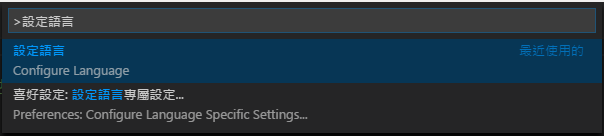
鍵盤輸入 Ctrl + Shift + P 跳出指令輸入框
輸入框 => 設定語言 => Enter
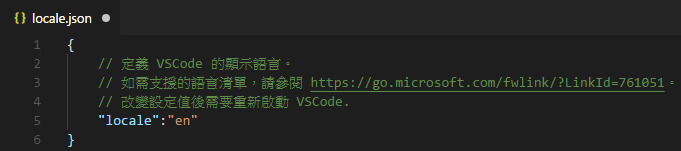
把"locale":"zh-tw"改為"locale":"en" 
vs_code1.png
vs_code2.png
儲存後重開 Visual Studio Code 即可

英文轉繁體中文

鍵盤輸入 Ctrl + Shift + P 跳出指令輸入框
輸入框 => configure Language => Enter
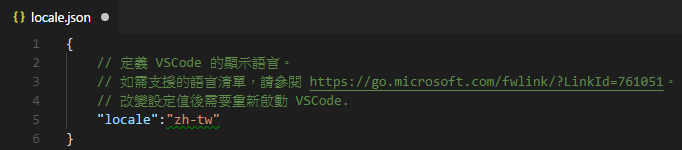
把"locale":"en"改為"locale":"zh-tw"  
vs_code3.png
vs_code4.png
儲存後重開 Visual Studio Code 即可
​

2018年2月1日 星期四

Python - Information Retrieval Evaluation-排序效果評估 (NDCG)

Information Retrieval Evaluation-排序效果評估 (NDCG)

版本相關資訊:

System version : Windows 10  64-bit
Python version : Python 3.6.0 :: Anaconda 4.3.1 (64-bit)

內文:

NDCG (Normalized Discount Cumulative Gain)
當資料有標記多等級時,可以使用NDCG來評估
算出的NDCG值愈接近1,代表效果越佳
以下為NDCG的計算公式與簡單範例:
i為新排序結果
reli為真實的排序等級


python codes:

"""
程式參考自:
https://gist.github.com/bwhite/3726239
https://gist.github.com/gumption/b54278ec9bab2c0e0472816d1d7663be
差異:新增「 sum (2^rel_i - 1) / log2(i + 1) 」的版本
作者:Jie Dondon
版本:ndcg_dondon_20180201_v2
"""

import numpy as np

def dcg_at_k(r, k, method=0):
    """Score is discounted cumulative gain (dcg)
    Relevance is positive real values.  Can use binary as the previous methods.

    There is a typographical error on the formula referenced in the original definition of this function:
    http://www.stanford.edu/class/cs276/handouts/EvaluationNew-handout-6-per.pdf
    log2(i) should be log2(i+1)

    The formulas here are derived from
    https://en.wikipedia.org/wiki/Discounted_cumulative_gain#Discounted_Cumulative_Gain

    The formulas return the same results when r contains only binary values
    >>> r = [2,3,2,3,1,1]
    >>> dcg_at_k(r,6,1)
    12.674304175856518
    >>> r = [3,3,2,2,1,1]
    >>> dcg_at_k(r,6,1)
    14.951597943562946


    Args:
        r: Relevance scores (list or numpy array) in rank order
            (first element is the most relevant item)
        k: Number of results to consider
        method: If 0 then sum rel_i / log2(i + 1) [not log2(i)]
                If 1 then sum (2^rel_i - 1) / log2(i + 1)
    Returns:
        Discounted cumulative gain
    """
    r = np.asfarray(r)[:k]
    if r.size:
        if method == 0:
            return np.sum(r / np.log2(np.arange(2, r.size + 2)))
        elif method == 1 :
            return np.sum(np.subtract(np.power(2, r), 1) / np.log2(np.arange(2, r.size + 2)))
        else:
            raise ValueError('method must in [0,1]')
    return 0.

def ndcg_at_k(r, k, method=0):
    """Score is normalized discounted cumulative gain (ndcg)
    Relevance is positive real values.  Can use binary
    as the previous methods.
    Example from

    2013-Introduction to Information Retrieval Evaluation p.3
    (http://www.stanford.edu/class/cs276/handouts/EvaluationNew-handout-6-per.pdf)
    ↑ 此份文件的公式有誤,導致提供的結果也是錯誤的
    2012-微軟亞洲研究院-武威-機器學習及排序學習基礎 p.36

    >>> r = [2, 1, 2, 0]
    >>> ndcg_at_k(r,4,0)
    0.96519546960144276
    >>> r = [2,3,2,3,1,1]
    0.84768893757694552

    Args:
        r: Relevance scores (list or numpy array) in rank order
            (first element is the most relevant item)
        k: Number of results to consider
        method: If 0 then sum rel_i / log2(i + 1) [not log2(i)]
                If 1 then sum (2^rel_i - 1) / log2(i + 1)
    Returns:
        Normalized discounted cumulative gain
    """
    dcg_max = dcg_at_k(sorted(r, reverse=True), k, method)
    if not dcg_max:
        return 0.
    return dcg_at_k(r, k, method) / dcg_max

使用方式:

r是一個list,list的順序為透過新方法排序的新排序結果,裡面的數字代表真實的等級,分數越高代表等級愈高。
k是要考慮的結果數量。
method為使用不同的公式:NDCG有不同的計算公式,原始作者僅提供兩種,此次修改的程式多提供一種方法,方法編號為1,公式如本文開頭所放的範例圖片。
r = [2, 1, 2, 0]
ndcg_at_k(r,4,0)
0.96519546960144276
r = [2,3,2,3,1,1]
ndcg_at_k(r,6,1)
0.84768893757694552
​